
Contingent workforce management helps businesses track temporary workers, contractors, labor costs, and project needs in one clear process. Without a set system, worker details can become spread across emails, files, and separate reports. This can make it harder to know who is working, what they cost, and where they are assigned.
A clear process helps teams keep better records. It can also make it easier to plan budgets, check labor costs, and manage workers from one project to the next.
Why Contingent Workforce Management Matters
A contingent workforce may include contractors, freelancers, temporary workers, and short-term staff. These workers can help a business handle busy seasons, special jobs, and changing work needs. Problems can start when each team tracks workers in a different way. One manager may use a spreadsheet. Another may use email. Payroll may have a separate record. This can make labor costs hard to follow.
Contingent workforce management helps bring key worker details into one process. Businesses can track:
- Worker names
- Job roles
- Start and end dates
- Pay or bill rates
- Hours worked
- Project costs
- Worker status
- Payroll records
When these details are easy to find, managers can see where labor money is going.

Contingent Workforce Management Tracks Costs
Knowing a worker’s hourly rate is only one part of labor cost. A business may also need to track overtime, taxes, payroll fees, insurance, and other costs tied to the job. Clear records help managers compare planned costs with real spending. This can show when a project is using more labor than expected.
It can also help teams spot cost changes early. Good worker records also support payroll services. Clear hours, pay details, and assignment records can make payroll easier to review. They also help teams see how much labor is being used on each job.
See Worker Status and Job Details
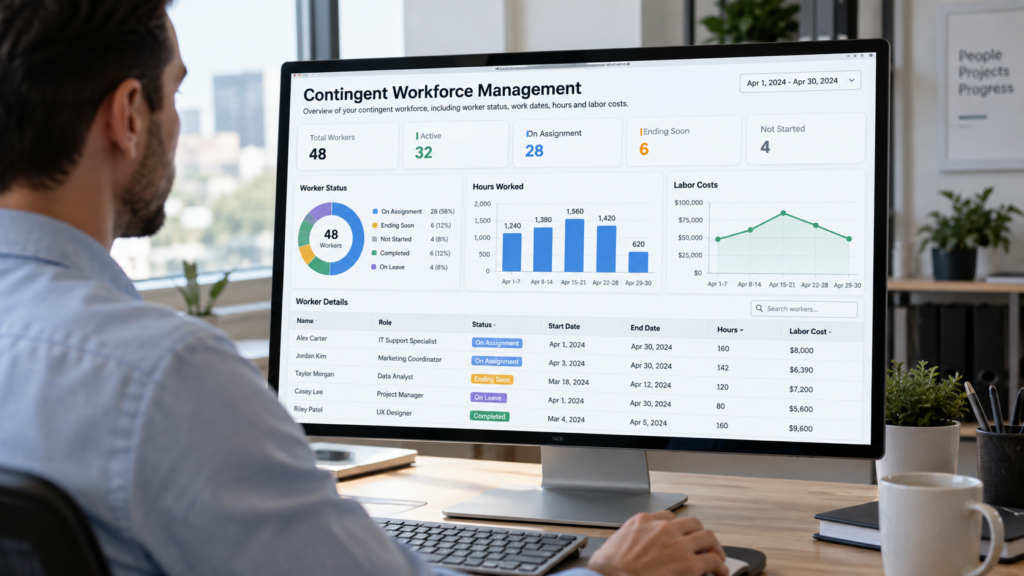
Cost tracking works better when worker status is clear. Managers should know if a worker is active, ending a job, waiting for approval, or moving to a new project. This helps HR, payroll, and project teams stay on the same page.
A clear worker record may include:
- Job title
- Manager
- Project
- Pay rate
- Work dates
- Hours
- Current status
These simple details can prevent confusion. They can also reduce the need to search through many files or emails.
Contingent Workforce Management Helps Planning
Clear labor data can also help with future plans. Past records can show how long workers stayed on a project, how much labor cost, and when more staff were needed. Managers can use this information when planning new work.
For example, a past project may have needed more hours than first planned. That information can help build a better budget next time. A team may also see that some jobs only need extra workers for a short time. This can help managers plan staff levels with more care.
Simple reports can show:
- Labor cost by project
- Labor cost by team
- Active workers
- Ending jobs
- Open staffing needs
- High or rising labor costs
This information can also support other HR services. Payroll, worker records, onboarding, and job tracking often work better when teams use the same clear process.
Keep Teams on the Same Page
HR, payroll, accounting, and project managers may all need worker data. If each team uses a different record, mistakes can happen. Hours may not match. Job dates may be wrong. Labor costs may be placed under the wrong project. A shared process helps reduce these gaps. For example, a project manager may approve hours. Payroll may process pay. Accounting may track costs for the job. If each team sees the same worker details, it is easier to check the numbers and fix errors.
Regular reviews can also help. Teams can check active workers, end dates, missing approvals, and cost changes before small issues grow.
FAQ About Contingent Workforce Management
What does contingent workforce management track?
It can track workers, jobs, hours, rates, costs, dates, and worker status. The exact setup may change based on the needs of the business.
How does it help track labor costs?
It gives managers a clearer view of worker hours, rates, and project costs. This makes it easier to compare a budget with real spending.
Can it help with payroll?
Yes. Clear worker records and approved hours can help payroll teams work with more complete information.
Can it help with staffing plans?
Yes. Past worker data can help managers plan future labor needs, set budgets, and decide when extra staff may be needed.
Get a Clear View of Workforce Costs
Temporary workers and contractors can help a business stay flexible. They can also create more records, labor costs, and job details to manage. Contingent workforce management gives teams a clearer way to track workers, costs, and job status. It can also help managers plan future staffing and keep labor spending easier to understand.
For help with payroll and workforce support, Incorp Technical Resources, LLC provides services that can make worker records and labor tasks easier to manage. Contact us to discuss your workforce needs. For more helpful articles, visit the Incorp Technical Resources, LLC blog.